Anomalies and weather
The anomaly is not a hazard system bolted on; it is the reason the weapon exists.
A meteorite broke the physics of the zone, magnets in the rock push Petryks into the air, and fog, rain and thunderstorms decide when you can travel. At night you either sit by a fire or approach strangers to check whether they are still human.
Beyond the settlements, Zaslon stops behaving. A meteorite came down on this ground and rearranged it, physics in the zone no longer follows the usual rules, and the rock itself now produces magnets of opposing polarity that push stones into the air. The game's own name for them is Petryks — flying stones that hover, and that seem to whisper something.
The anomaly layer
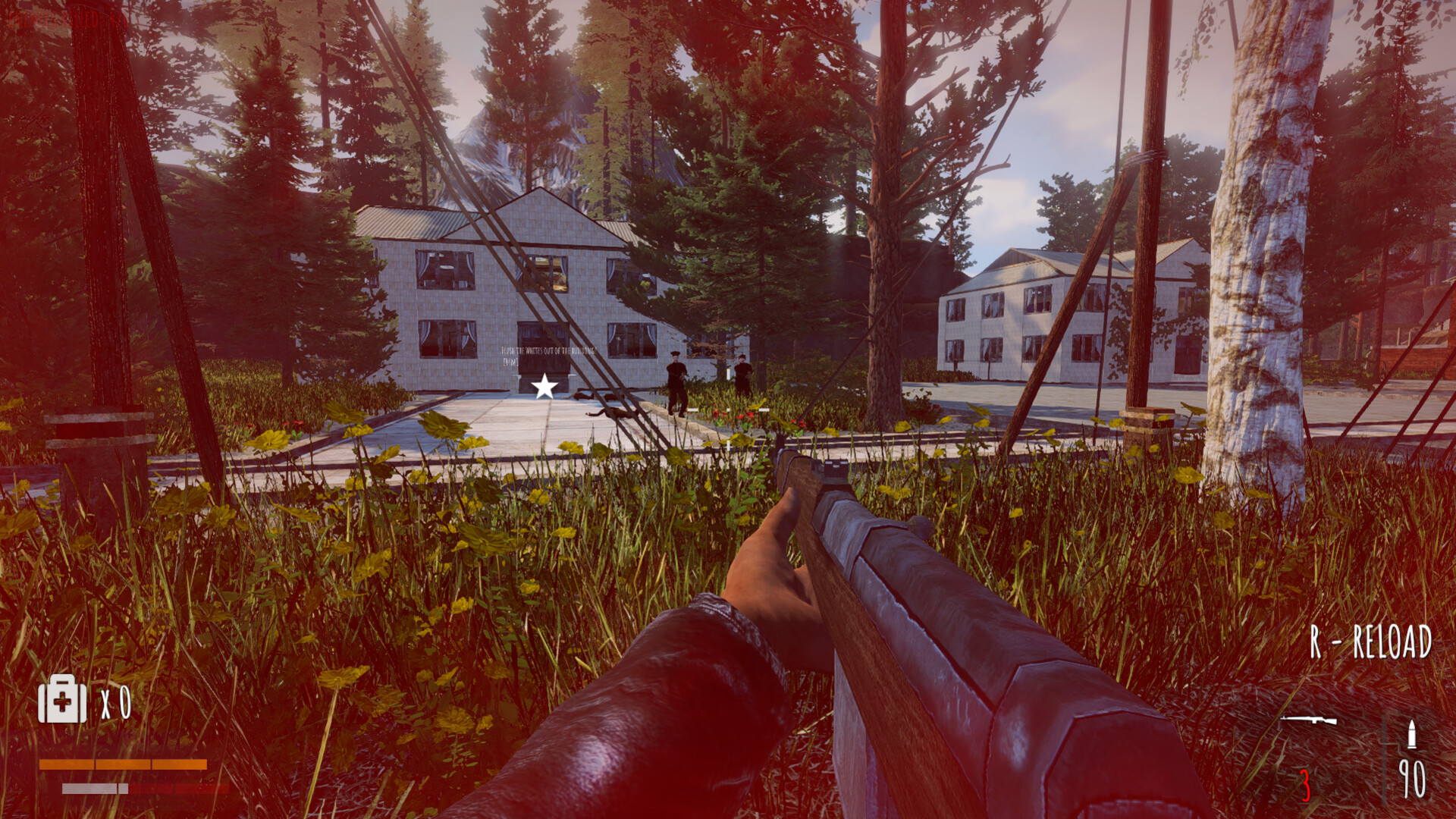
| Phenomenon | What official material says |
|---|---|
| The meteorite | A meteorite fell here and changed the territory beyond recognition |
| Physics | Zaslon is not subject to the standard laws of physics |
| Magnets | Magnets of different polarity appeared in the rock |
| Petryks | Flying stones that hover in the air and seem to whisper |
| Nightmares | One local people suffers nightmares that were described only in their legends |
| Entities | Legendary creatures that appear in the flesh |
| Metal | You cannot carry much of it here; the region was built on human labour |
| The prize | The key to world domination lies here, and nobody knows how to use it |
The Petryvki hanging rock anomaly is a real landmark inside this system: a player's opening quest in the discussion board starts with a scout stationed there. Treat the Petryks as the map's landmark layer — they mark places where the zone is thickest.
Weather is a mechanic, not decoration
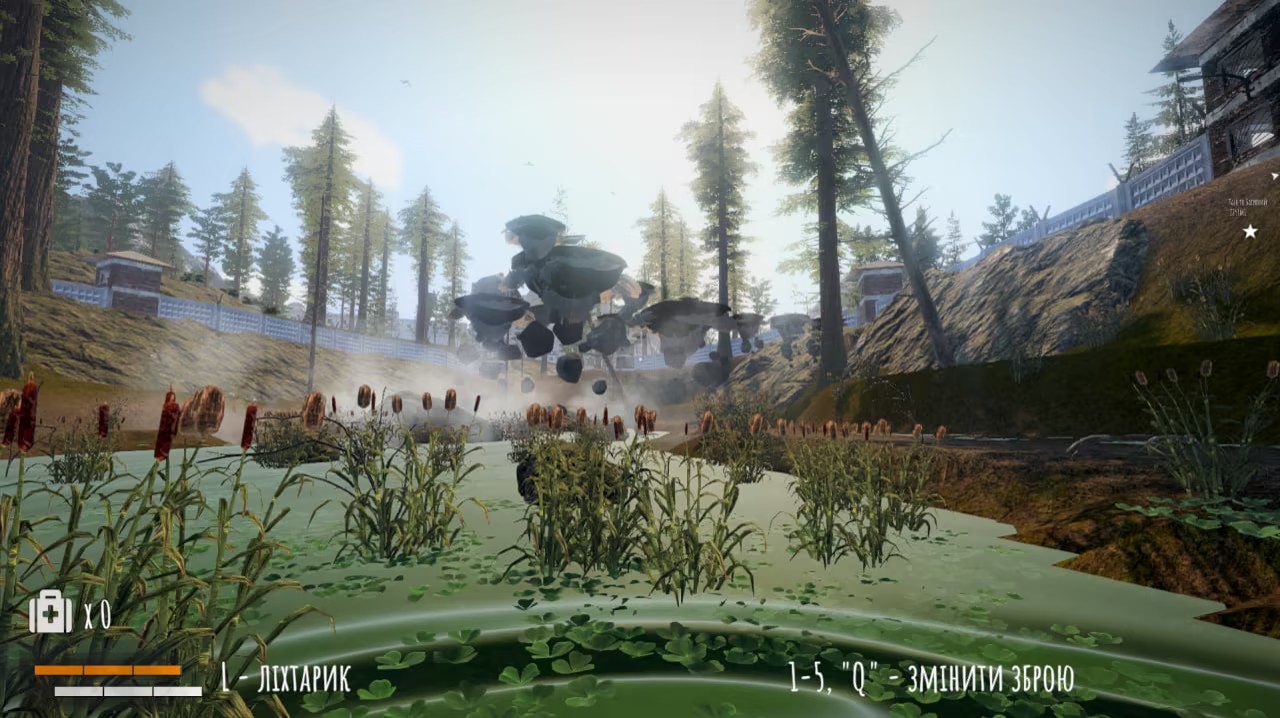
Fog, rain and thunderstorms roll over the map and change what you can do. The store page frames it as a choice rather than a hazard: depending on the weather, you can sit by a fire until the dark night passes, or approach people to see whether they are human at all.
That single sentence is the whole night design. Two things are true at once — the fire is safe and the fire attracts attention — and the game wants you to keep checking which of those is happening.
Practical rules for a night outside
- Pick your fire site with an exit. Sit where you can see the treeline and leave without crossing open ground.
- Check the faces that join you. Night encounters are built around the question of whether the figure walking up is still a person; the store page says so directly.
- Save before dark. The game supports saving at any time and there are no generous checkpoints.
- Do not carry scrap. The zone's metal restriction is a setting fact — see weapons for how it shapes the arsenal.
- Use the daylight for distance. Fog is survivable; fog plus night is where players lose their bearings.
Reading the zone without a map marker
Anomalous ground is where objective confusion gets blamed first, and usually wrongly. If a marker disappears near an anomaly, the cause is far more likely the known marker bug than the zone: the reported fix is a restart, and the studio's reply in that thread was to reload the game.
For the mechanics of that problem, go to quest progression. For the settings that make a dark, foggy taiga readable — Contrast, added in June 2026, and FSR for weaker GPUs — see how to play.
What the zone is for, narratively
The anomaly is not a hazard system bolted onto a shooter. It is the reason the weapon exists: the mineral at the centre of the story is local, the physics that make Zaslon valuable are local, and the legends that have started walking are local too. When the game says the key to world domination is lying in this territory and nobody knows how to use it, the anomaly is what makes that sentence literal rather than rhetorical.
The factions fighting over it — three nations of former prisoners, one convinced it is superior — are on the world and factions page.